
.jpeg)
Handling abrasive, high-density slurry is one of the toughest jobs in mining and mineral processing. Pick the wrong pump and you're looking at frequent liner replacements, unplanned downtime, and rising maintenance costs. Pick the right one, and it runs for years with predictable upkeep.
This guide breaks down what actually matters when you're evaluating an industrial slurry pump for your plant — the types available, what to check before you buy, and how to compare slurry pump manufacturers on more than just price.
What Is an Industrial Slurry Pump?
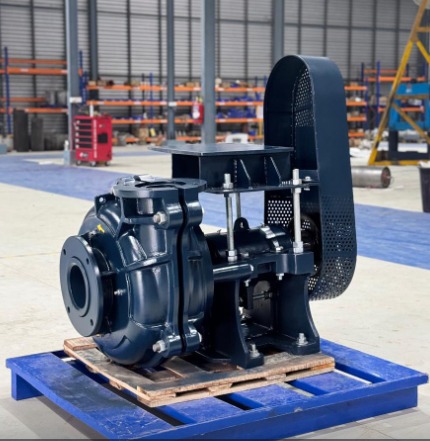
An industrial slurry pump is built to move a mixture of liquid and solids — ore fines, tailings, sand, or mineral concentrate — without the wear and clogging that a standard water pump would suffer within weeks. The difference comes down to three things: thicker wear-resistant casings, wide impeller clearances that let solids pass through, and materials chosen specifically to resist abrasion.
Where a centrifugal water pump might last years in clean service, that same pump moving 40% solids slurry could fail in months. That's the entire reason heavy duty slurry pumps exist as a separate product category, engineered from the ground up for abrasive, high-solids environments.
Where Slurry Pumps Are Used
- Mining and ore processing — moving crushed ore slurry between processing stages
- Mineral separation — feeding and discharging from hydrocyclones and classifiers
- Tailings management — transporting waste slurry to disposal or thickening
- Aggregate and quarry operations — washing and dewatering sand and gravel
- Dredging — pumping sediment-heavy water from riverbeds or ponds
If your operation touches any of these, the pump you choose has a direct effect on plant uptime.
Types of Industrial Slurry Pumps
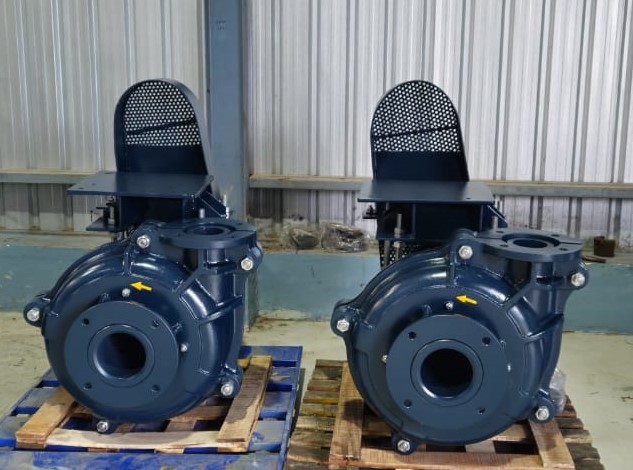
1. Horizontal Slurry Pumps The most common choice for general mineral processing. Easy to maintain, widely available in a range of sizes, and suited to medium-to-high head applications.
2. Vertical Slurry Pumps (Sump Pumps) Installed directly in a sump or pit, these are ideal where floor space is limited or where slurry needs to be pumped from a collection point without a separate suction line.
3. Submersible Slurry Pumps Fully submerged in the slurry itself, these reduce the risk of leaks and are common in dredging and wastewater applications.
4. Rubber-Lined vs. Metal-Lined Pumps Rubber linings handle fine, less abrasive slurry well and absorb impact. Metal (high-chrome) linings are the standard choice for coarse, sharp-edged, high-abrasion material — which is why most heavy duty slurry pumps in mining use metal linings rather than rubber.
What to Check Before You Buy
| Factor | Why It Matters |
| Solids concentration (% by weight) | Determines impeller design and wear rate |
| Particle size and sharpness | Drives choice between rubber and metal lining |
| Flow rate and head required | Sizes the pump and motor correctly |
| pH and chemical exposure | Affects material selection beyond wear resistance |
| Duty cycle (continuous vs. intermittent) | Impacts bearing and seal selection |
| Available spares and service support | Determines real-world uptime, not just pump specs |
A pump that's undersized for your solids concentration will wear out fast, regardless of build quality. This is where working with an experienced slurry pumps manufacturer in India who asks the right questions upfront saves money over the life of the equipment — not just at the time of purchase.
Slurry Pumps and Hydrocyclones Work Together
In most mineral processing circuits, slurry pumps don't work alone — they feed hydrocyclones for particle classification and separation. Pump sizing and hydrocyclone selection need to match: an undersized pump starves the cyclone of pressure, while an oversized one wastes energy and accelerates wear. When you're sourcing equipment, it's worth evaluating your pump and cyclone needs together rather than separately. Reputable hydrocyclone separator suppliers will typically ask for your slurry pump specs before recommending a cyclone size, since the two are directly linked in circuit performance.
Comparing Slurry Pump Manufacturers: What Actually Matters
Price is the easiest thing to compare and often the least useful. Before choosing between slurry pump manufacturers, look at:
- Material engineering — Are wear parts made in-house or outsourced? In-house casting usually means better quality control.
- Customisation — Can they size a pump to your exact duty point, or only offer standard catalogue sizes?
- Spare parts availability — A pump that's cheap to buy but expensive or slow to get spares for costs more over time.
- After-sales support — Field service, installation guidance, and troubleshooting access matter once the pump is running.
- Track record in your industry — A manufacturer with mining and mineral processing experience understands abrasive slurry differently than one focused on general industrial pumping.
Maintenance Tips to Extend Pump Life
- Monitor wear parts (impeller, liner, throat bush) on a schedule, not just after failure.
- Keep solids concentration within the pump's rated range wherever possible.
- Check seal and bearing condition during routine shutdowns.
- Avoid running the pump dry, even briefly — this is one of the fastest ways to damage seals.
- Keep a stock of critical spares to avoid extended downtime waiting on parts.
Final Thoughts
Choosing the right industrial slurry pump isn't just a spec-sheet exercise — it's about matching pump design to your actual slurry conditions and working with a manufacturer who supports the equipment after installation. Whether you need a standard horizontal pump or a fully customised heavy duty slurry pump for a demanding mining application, getting the sizing and material selection right upfront is what keeps your plant running.
Frequently Asked Questions
1. What is the difference between a slurry pump and a regular centrifugal pump? A slurry pump has thicker, wear-resistant casings and wider impeller clearances designed to handle abrasive solids, while a regular centrifugal pump is built for clean liquids and wears out quickly if used for slurry.
2. How do I know if I need a rubber-lined or metal-lined slurry pump? Rubber linings suit fine, low-abrasion slurry, while metal (high-chrome) linings handle coarse, sharp, high-abrasion material — typical of most mining applications.
3. What is considered a heavy duty slurry pump? A heavy duty slurry pump is engineered for high solids concentration, large particle sizes, and continuous operation in abrasive conditions, using reinforced wear parts and heavier casings than standard models.
4. Can one slurry pump handle different types of slurry? Not efficiently. Pumps are sized and lined for a specific solids concentration and particle profile, so switching to a very different slurry type usually means re-evaluating pump selection.
5. How often should slurry pump wear parts be replaced? This depends on abrasiveness and duty cycle, but wear parts like impellers and liners should be inspected on a set schedule rather than run to failure, since failure often causes additional downstream damage.
6. What causes premature slurry pump failure? Common causes include running the pump dry, undersizing for actual solids concentration, poor liner material choice, and skipping routine wear inspections.
7. Do slurry pumps need to be paired with a hydrocyclone? Not always, but in mineral processing circuits where particle classification is needed, pump output and hydrocyclone sizing need to be matched for the circuit to perform efficiently.
8. What's the typical lead time when ordering from a slurry pump manufacturer in India? Lead times vary by pump size and customisation level; standard catalogue sizes ship faster than pumps built to custom specifications.
9. Can slurry pumps be customised for specific plant requirements? Yes. Manufacturers with in-house engineering can adjust impeller design, materials, and sizing to match your exact flow rate, head, and solids conditions rather than forcing a standard size.
10. What should I ask a slurry pump manufacturer before placing an order? Ask about material sourcing (in-house vs. outsourced), spare parts availability and lead time, after-sales field support, and whether they'll size the pump to your actual operating conditions rather than the nearest standard model.
.jpeg)
.jpeg)